DEF System Problems, Causes, Derate, Reset and Repair
DEF System Problems: Causes, Derate, Reset and Repair
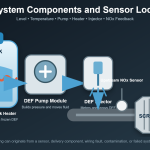
Modern diesel vehicles rely on a DEF tank, heater, pump, line, injector, sensors, control module, and SCR catalyst. A fault in any one can trigger a warning, reduce performance, or start a countdown toward idle-only or no-restart operation.
This guide explains common DEF system problems, how to read service messages, what derate means, and how a proper reset works. Because warning stages and repair procedures vary, use this information for diagnosis and follow the exact instructions in your owner’s manual.

Key Insights
- A full DEF tank does not rule out a pump, sensor, injector, wiring, or SCR fault.
- A service message should be diagnosed before the vehicle enters a deeper restriction.
- Derate limits speed or power when the system cannot verify correct emissions control.
- A proper reset follows repair; it does not replace diagnosis.
- Contamination prevention is one of the simplest ways to reduce repeat failures.
How the DEF System Works
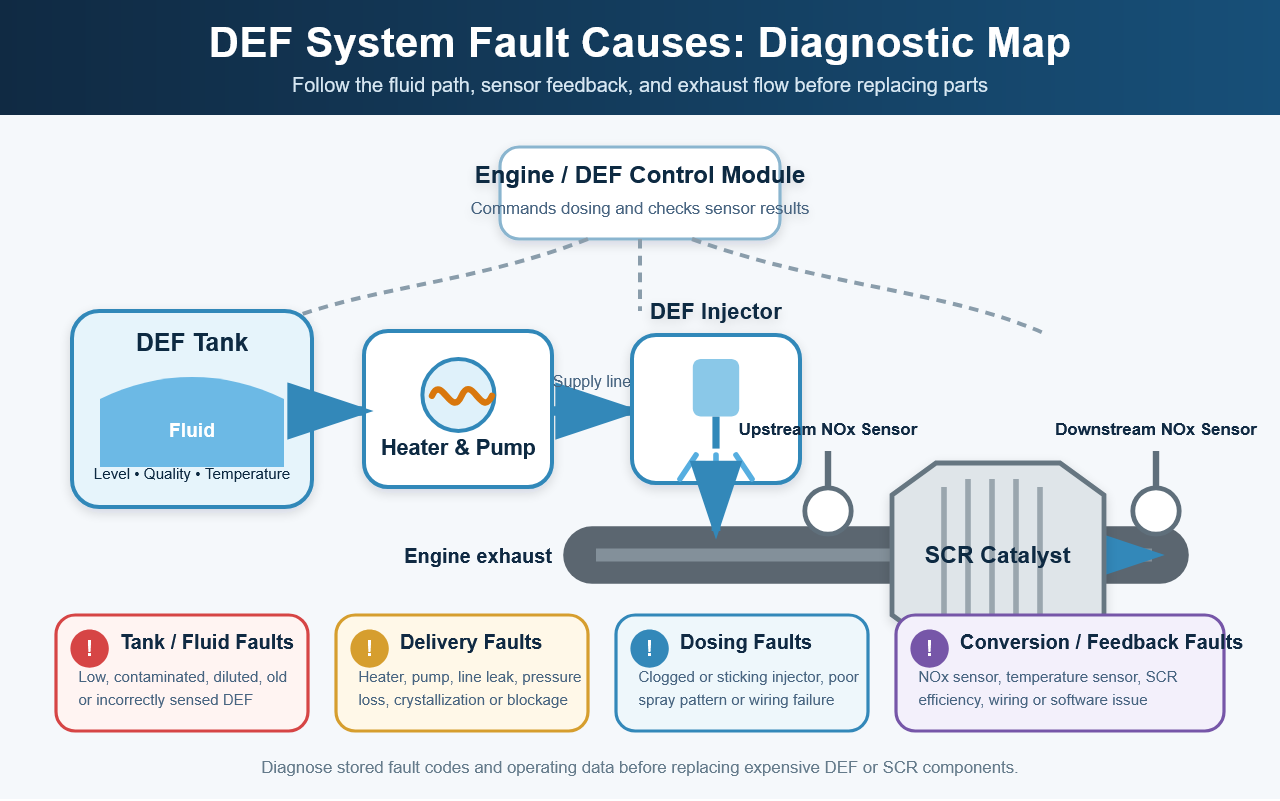
The control module compares fluid level, temperature, pressure, dosing commands, exhaust temperature, and NOx sensor readings. If the expected results do not appear, it stores diagnostic codes and may display a warning.
That means the tank can be full while the system remains unable to deliver fluid, confirm its quality, or prove that the catalyst is reducing emissions correctly.
DEF System Fault Causes
The main DEF system fault causes fall into four groups:
- Fluid and tank: low level, contaminated or old DEF, freezing, or a failed level or quality sensor.
- Delivery: failed heater, weak pump, leaking line, low pressure, crystallization, or blockage.
- Dosing: clogged injector, poor spray pattern, sticking valve, damaged wiring, or control failure.
- Conversion and feedback: bad NOx or temperature sensors, exhaust leaks, SCR inefficiency, wiring, or software faults.

API warns that contaminated DEF and dirty dispensing equipment can contribute to injector clogging. Use sealed, correctly specified fluid and dedicated equipment.
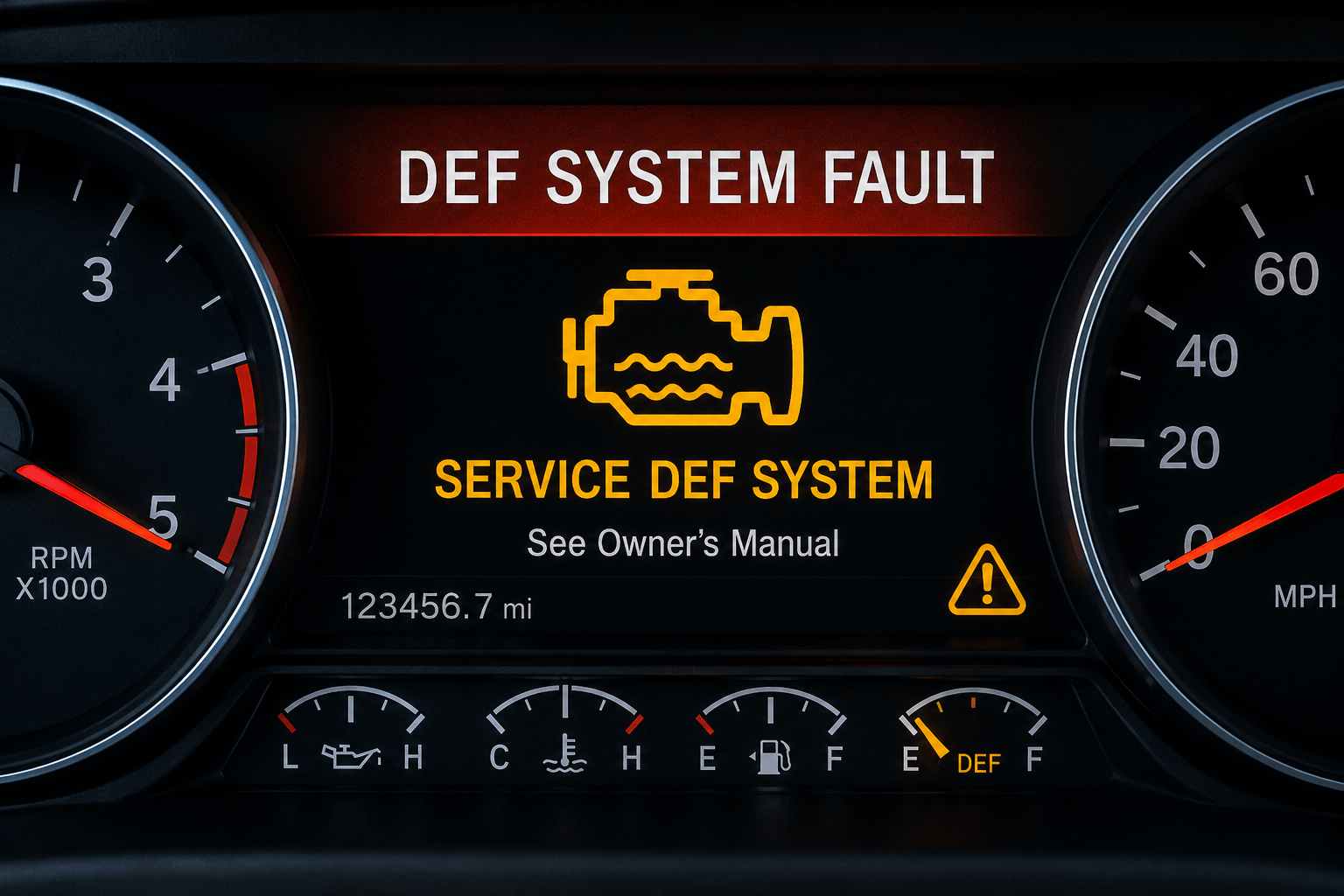
Service DEF System Message
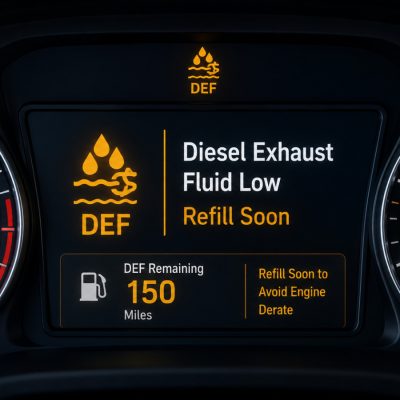
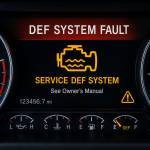
A service DEF system message means the vehicle detected a malfunction that needs attention. It is not the same as a normal low-level reminder.
Messages may progress from a service request to a distance countdown, speed restriction, or idle-only condition. Ford owner information, for example, lists fault messages that warn of upcoming speed limits and later idle restriction.
DEF System Malfunction No Restart
A DEF system malfunction no restart message means the vehicle has detected a serious or unresolved condition and is counting down toward a starting restriction. Some vehicles prevent restart after shutdown; others move to idle-only or very low speed.
Do not switch off the engine in an unsafe location when the display warns it may not restart. Move safely toward service while following the manual. This message does not always mean the engine itself has failed; it often means the vehicle cannot verify normal DEF and SCR operation.
DEF System Derate Explained
With DEF system derate explained, the key point is that warning stages usually appear before the final restriction:
- Initial warning.
A service or level message appears. - Countdown.
The display shows distance, time, or restarts remaining. - Reduced power or speed.
The vehicle limits performance. - Idle-only or no restart.
The final restriction begins.
EPA notes that DEF-equipped vehicles can reduce speed drastically or become inoperable when fluid runs out or sensors fail. The exact strategy depends on the vehicle.
How to Reset DEF System
The correct answer to how to reset DEF system is to repair the cause first. Disconnecting the battery, erasing codes without repair, or adding more fluid to a full tank does not fix a failed component.
A proper reset usually involves:
- Read codes and live data.
Identify the affected function. - Correct the cause.
Repair leaks, wiring, blocked parts, or failed components. - Clear codes with a compatible scan tool.
Some repairs need a service function or relearn. - Complete verification.
The vehicle may need a warm-up or drive cycle. - Confirm codes do not return.
A returning warning still has an active cause.
Expert Diagnostic Recommendations
- Read the full message, not only the warning icon.
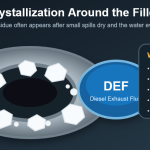
- Check level, refill history, leaks, and white crystal deposits.
- Use a scan tool that reads manufacturer-specific SCR data.
- Compare commanded dosing with pressure and NOx readings.
- Inspect wiring before replacing expensive modules.
- Check warranty coverage, recalls, and service information.
Avoid replacing the tank, pump, injector, and NOx sensors together without testing. Focused diagnosis costs less and reduces repeat failure.
Frequently Asked Questions
Can low DEF cause a system fault?
Yes. A very low tank can trigger warnings and restrictions, but a fault message may also indicate a component or quality problem.
Why is the warning still on after a refill?
The refill may need time or a minimum quantity to register. A fault message may not clear until the underlying problem is repaired.
Can cold weather cause DEF problems?
Yes. DEF freezes near 12°F, or −11°C. A failed heater or temperature sensor can prevent normal operation.
Can contaminated DEF damage the system?
Yes. It can affect sensors, clog the injector, create deposits, and reduce SCR performance.
Will disconnecting the battery reset the system?
It may interrupt the warning temporarily, but it does not repair the cause and can erase useful diagnostic data.
Can I drive during a DEF derate?
Follow the dashboard and manual. Move safely toward service before the restriction becomes more severe or the vehicle cannot restart.
Conclusion
DEF system problems can involve the fluid, tank, heater, pump, injector, sensors, wiring, catalyst, or software. A full tank does not guarantee a healthy system.
Read the message, capture the codes, diagnose the failed function, complete the repair, and verify the system before treating the warning as resolved.
Diagnose DEF Problems Before Derate
Explore our DEF System Troubleshooting guides for sensors, pumps, injectors, crystallization, diagnostic codes, and no-restart conditions.
No Comment! Be the first one.