


DEF Crystallization Causes, Cleaning and Prevention

DEF Crystallization: Causes, Cleaning and Prevention
White residue around a diesel exhaust fluid cap or injector can look alarming, but not every deposit signals a failed component. DEF contains dissolved high-purity urea and deionized water. When a small spill dries, the water leaves and the urea remains as a chalky or crystalline layer.
This guide explains DEF crystallization, why it forms, how to clean exterior residue safely, and when internal buildup requires diagnosis. It also separates normal injector-tip deposits from crystals that restrict flow or distort the spray pattern. Follow the service procedure for your vehicle because cleaning methods vary by system.
Key Insights
- DEF leaves white urea residue when its water content evaporates.
- Small deposits around the filler neck often come from splashes or a damp cap.
- Light injector-tip crystallization after shutdown may be normal.
- Restricted flow, failed priming, or an irregular spray pattern requires diagnosis.
- Exterior residue can be cleaned with water, but water must not enter the DEF tank.
What Is DEF Crystallization?
For anyone asking does DEF crystallize when it dries, the answer is yes. Fresh DEF is a clear liquid, but exposed droplets can dry into powdery, crusty, or hard white deposits. You may see them near the cap, on a dispensing nozzle, around a line fitting, or at the dosing injector.
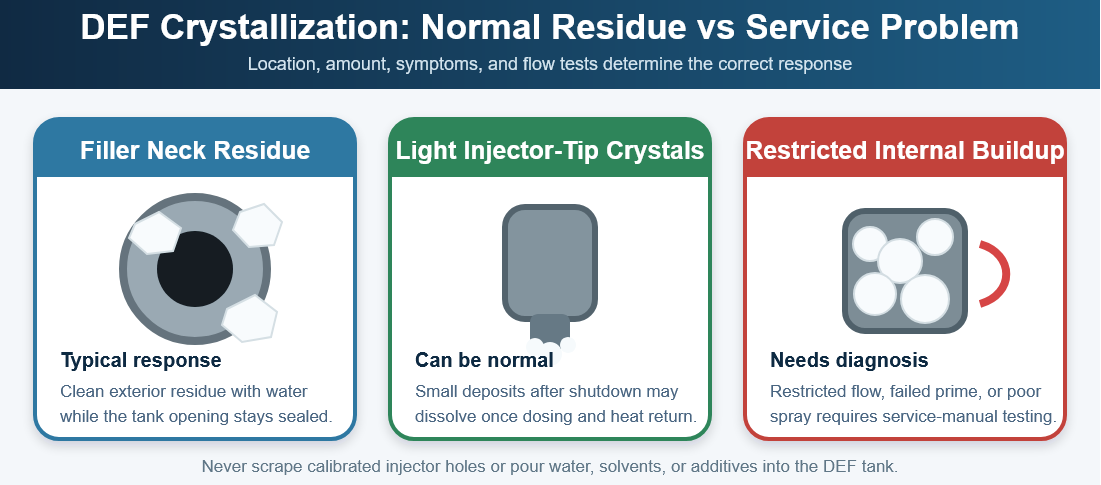
Location and effect matter more than appearance. Small exterior deposits may need only cleanup. Internal buildup that changes pressure, flow, or spray requires testing before parts are cleaned or replaced.
What Causes DEF Crystallization?
The main answer to what causes DEF crystallization is evaporation, but operating and maintenance conditions determine where deposits collect and whether they become harmful.
- Spills and drips: DEF left on the filler neck, cap, body panel, or dispensing equipment dries into residue.
- Incomplete purge: fluid remaining inside some dosing systems after shutdown can form internal crystals.
- Low exhaust temperature: repeated short or low-load operation may reduce complete DEF conversion near the injector.
- Incorrect concentration: diluted, contaminated, or off-specification fluid may increase deposit risk.
- Leaks or poor sealing: damp fittings and connections repeatedly expose DEF to air.
- Maintenance problems: dirty equipment, blocked passages, or improper repair methods can worsen buildup.
Cummins guidance lists incomplete purge, low-temperature operation, incorrect concentration, and maintenance issues among causes of internal buildup.
DEF Crystals Around Filler Neck
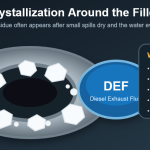
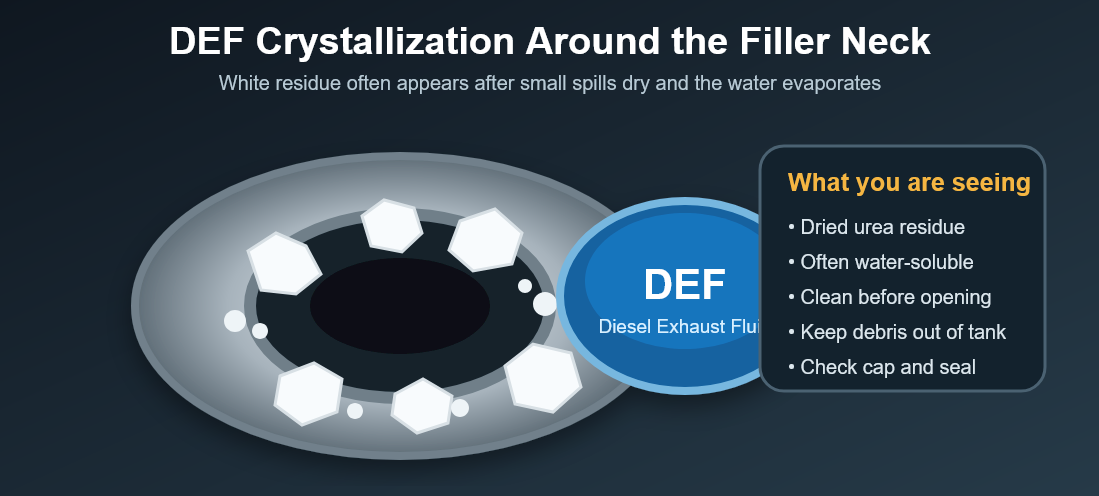
DEF crystals around filler neck areas usually form when fluid splashes during refilling or remains on the cap and threads. The residue does not prove a system failure.
Clean the outside before opening the cap so particles cannot enter the tank. Inspect the seal, threads, and surrounding area. Residue that returns soon may indicate overfilling, a loose cap, or leakage.
How to Clean DEF Crystals
The safe answer to how to clean DEF crystals depends on whether the residue is outside the system or inside a calibrated component.
- Keep the tank sealed.
Do not open the filler until loose exterior residue has been removed. - Use clean water on exterior deposits.
Apply it with a clean cloth rather than pouring it toward the tank opening. - Wipe gently.
Do not push crystals into threads, vents, connectors, or the filler neck. - Rinse the cloth and repeat.
Continue until the residue dissolves instead of spreading it across the surface. - Dry and inspect.
Check the cap, seal, filler, and nearby wiring for damage or recurring leakage.
Never add water to the tank, use household chemicals, or blow residue toward connectors. For internal buildup, follow the service manual; the system may require flushing, pressure testing, dosing measurement, or component removal.
DEF Injector Crystallization
DEF injector crystallization requires careful interpretation. Hino and Jaguar Land Rover service guidance states that some crystals on the injector tip after shutdown can be normal and may dissolve after dosing resumes and the exhaust becomes hot.
Do not replace an injector based only on a small visible deposit. Look for evidence that the system is actually restricted:
- Low delivered quantity during a dosing test
- Restricted flow or a failed prime
- An irregular spray pattern
- Crystals blocking nozzle holes or internal fittings
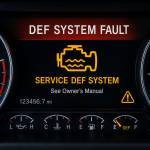
- Pressure, quality, or SCR-efficiency fault codes
Never scrape the nozzle holes with a pin, drill, brush, or metal tool. Calibrated openings can be damaged even when they look clear afterward.
Expert Recommendations for Prevention
- Use sealed, correctly specified DEF from a reliable source.
- Keep pumps, nozzles, funnels, and containers dedicated to DEF.
- Wipe fresh spills before they dry.
- Do not repeatedly top off the tank after the nozzle stops.
- Repair damp fittings, loose caps, and recurring leaks promptly.
- Investigate low-temperature duty cycles when injector deposits become excessive.
- Use diagnostic tests before replacing the pump, injector, sensors, or catalyst.
Frequently Asked Questions
Are white DEF crystals dangerous?
They are usually dried urea residue, but they can be slippery, corrosive to some materials, and harmful to system performance if contamination or internal blockage is present.
Can I wash DEF crystals away with water?
Clean water can dissolve exterior residue when the tank remains sealed. Do not pour water into the DEF tank or use contaminated cleaning equipment.
Do crystals on the injector mean it is clogged?
No. Light tip crystallization can be normal. A clog should be confirmed through flow, pressure, spray, or dosing tests.
Why do crystals keep returning near the cap?
Repeated residue may come from overfilling, a loose or damaged cap, a wet dispensing nozzle, or leakage around the filler assembly.
Can short trips increase injector deposits?
They can contribute when exhaust temperatures remain too low for complete DEF conversion, although the vehicle and duty cycle determine the actual risk.
Should I use a DEF cleaning additive?
Do not add unapproved chemicals to the tank. Use the fluid and cleaning procedures specified by the vehicle or engine manufacturer.
Conclusion
DEF crystallization begins when water evaporates and urea remains. Exterior residue around a filler neck is often easy to clean, while internal buildup must be judged by pressure, flow, spray, and fault-code evidence.
Keep the tank sealed during cleanup, use clean water only on exterior residue, and follow the service manual for injector or dosing-system deposits.
Stop Small DEF Deposits From Becoming Big Problems
Explore our DEF Crystallization & Deposits guides for injector cleaning, filler-neck care, contamination prevention, dosing faults, and SCR troubleshooting.

Other Articles
DEF Shelf Life Expiration, Storage and Date Codes
DEF Sensor Problems Symptoms, Testing and Repair

No Comment! Be the first one.