
How SCR Works in Diesel Engines DEF and NOx Explained

How SCR Works in Diesel Engines: DEF and NOx Explained
Diesel engines provide strong torque and good fuel efficiency, but high-temperature combustion can create nitrogen oxides, known as NOx. Selective catalytic reduction treats those gases after they leave the engine. The system injects diesel exhaust fluid into the exhaust and uses a catalyst to convert much of the NOx into nitrogen and water.
This guide explains how SCR works, what happens inside the exhaust, how it differs from exhaust gas recirculation, and whether DEF affects fuel economy. It also covers the parts drivers should protect to keep the system reliable.
Key Insights
- SCR treats NOx in the exhaust after combustion.
- Heat converts DEF into ammonia before the SCR catalyst.
- The catalyst helps form mainly nitrogen and water.
- SCR and EGR control NOx in different ways.
- DEF does not directly add power or mileage.
What Is an SCR System?
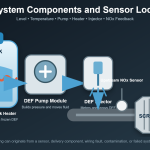
A typical system includes a DEF tank, pump, heated lines, dosing injector, mixing section, SCR catalyst, temperature sensors, NOx sensors, and an electronic controller. Many vehicles also place a diesel oxidation catalyst and diesel particulate filter in the same aftertreatment assembly.
These parts do different jobs. The particulate filter captures soot. SCR targets NOx. Adding DEF will not clean a blocked filter, and completing a filter regeneration will not automatically correct an SCR fault.
How Does SCR Work in Diesel Engines?
The clearest answer to how does SCR work in diesel engines is to follow the exhaust through six stages.
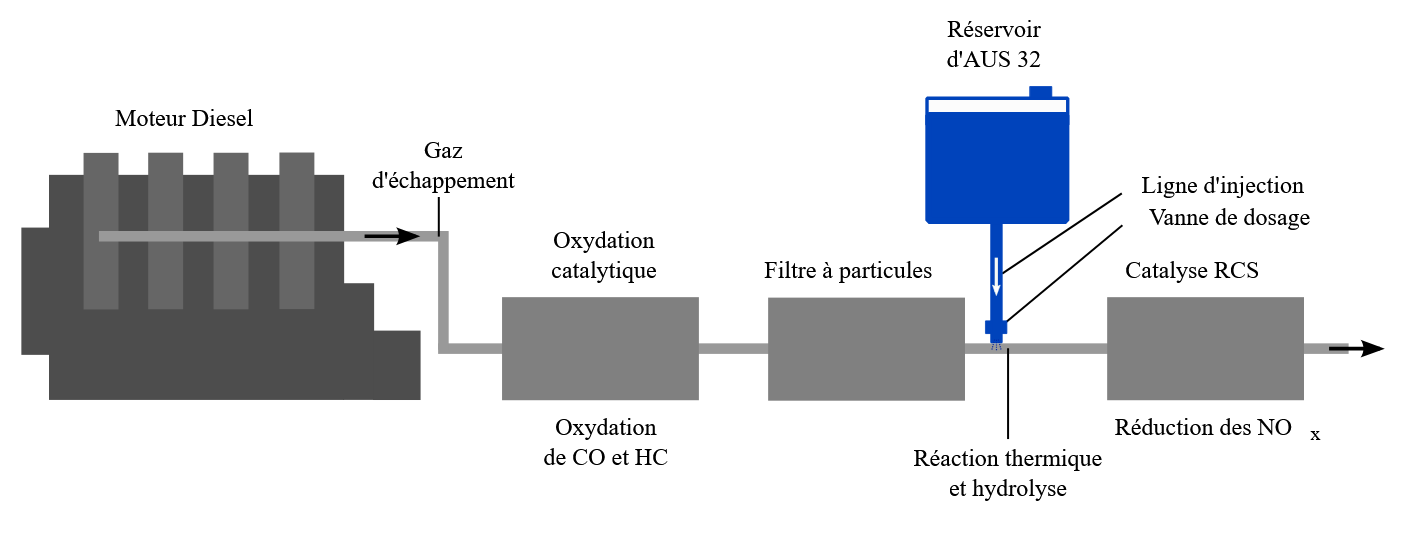
- The engine produces exhaust.
Combustion creates gases that include NOx. - Sensors report conditions.
The controller tracks temperature, load, exhaust flow, and NOx readings. - The injector sprays DEF.
The dose changes continuously with operating conditions. - Heat transforms the fluid.
Water evaporates and urea produces ammonia. - The catalyst supports the reaction.
Ammonia reacts selectively with NOx. - Downstream sensors check performance.
The controller adjusts dosing and detects faults.
Accurate dosing is essential. Too little ammonia leaves NOx untreated. Too much may pass beyond the catalyst. The system therefore meters DEF instead of spraying a fixed amount.
What Happens to DEF in the Exhaust?
For readers asking what happens to DEF in the exhaust, the fluid does not simply coat the catalyst. Its water evaporates, while heat breaks the urea down and produces ammonia. The exhaust flow and mixing section spread the ammonia before it reaches the catalyst.
Temperature matters. When the exhaust is too cold, the system may delay or reduce dosing because droplets can form deposits instead of converting cleanly. Sustained driving, heavy load, and towing usually create hotter exhaust than short cold trips.
DEF and NOx Reduction Explained
In simple terms, DEF and NOx reduction explained comes down to a controlled chemical reaction. Ammonia acts as the reducing agent. The catalyst provides the surface needed for ammonia and NOx to react, producing mainly nitrogen and water.
The process is called “selective” because it favors reactions with nitrogen oxides in oxygen-rich diesel exhaust. It does not remove every pollutant. Soot is handled mainly by the particulate filter, while other catalyst components address carbon monoxide and unburned hydrocarbons.
SCR vs EGR Diesel Emissions
The phrase SCR vs EGR diesel emissions compares two control strategies. EGR sends a measured amount of exhaust back into the intake, lowering peak combustion temperature so the engine forms less NOx. SCR treats NOx later, after combustion.
| Feature | SCR | EGR |
|---|---|---|
| Location | Exhaust system | Engine intake and combustion |
| Method | DEF-derived ammonia and catalyst | Recirculated exhaust gas |
| Main goal | Convert NOx after formation | Reduce NOx formation |
| Common concerns | DEF quality, injector, sensors, catalyst | Valve, cooler, passages, soot buildup |
Manufacturers often use both. The final design balances fuel use, cooling demand, soot production, engine performance, and aftertreatment efficiency.
Does DEF Improve Fuel Economy?
The honest answer to does DEF improve fuel economy is indirect. Because SCR treats NOx after combustion, engineers may have more freedom to calibrate an engine for efficient operation. Cummins notes this opportunity in some applications, but actual mileage still depends on the engine, load, route, speed, idle time, maintenance, and driving style.
Drivers should track diesel and DEF costs together. Pouring more DEF into a properly working system will not increase mileage.
Expert Recommendations for Reliable SCR Operation
- Use correctly specified DEF. Poor concentration or contamination can disrupt dosing.
- Keep equipment separate. Never reuse funnels that held fuel, oil, coolant, or tap water.
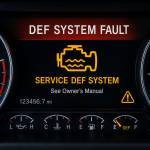
- Act on warnings early. A full tank does not rule out a pump, injector, sensor, or catalyst fault.
- Diagnose before replacing parts. Read codes and test the system before buying expensive components.
- Maintain the engine. Exhaust leaks, poor combustion, and fluid leaks can affect SCR performance.
Frequently Asked Questions
Is SCR the same as a diesel particulate filter?
No. The particulate filter captures soot. SCR mainly reduces nitrogen oxides through DEF-derived ammonia and a catalyst.
Can SCR work without DEF?
A DEF-based system cannot maintain normal NOx conversion without the required fluid. The vehicle may issue warnings or limit performance.
Why does DEF use increase while towing?
Towing raises load, fuel use, and exhaust flow. The controller may dose more DEF because it must treat more NOx.
Does DEF remove soot?
No. DEF supports NOx reduction in the SCR catalyst. The diesel particulate filter captures soot.
Why does SCR need hot exhaust?
Heat helps water evaporate, urea produce ammonia, and catalyst reactions proceed effectively. Low temperature can increase deposit risk.
Conclusion
Understanding how SCR works makes modern diesel aftertreatment easier to manage. DEF converts into ammonia, the catalyst helps it react with NOx, and sensors verify the result.
SCR is different from EGR and does not replace the particulate filter. Together, these systems help balance emissions, performance, durability, and operating cost.
Continue Learning About SCR and DEF
Explore our SCR Systems & Diesel Emissions guides for clear explanations of warning lights, NOx sensors, dosing injectors, crystallization, and diagnostic faults.

Other Articles
What Is DEF Made Of? Urea, Water and Chemistry Explained
DEF Consumption Rate How Much Fluid Does a Diesel Use?